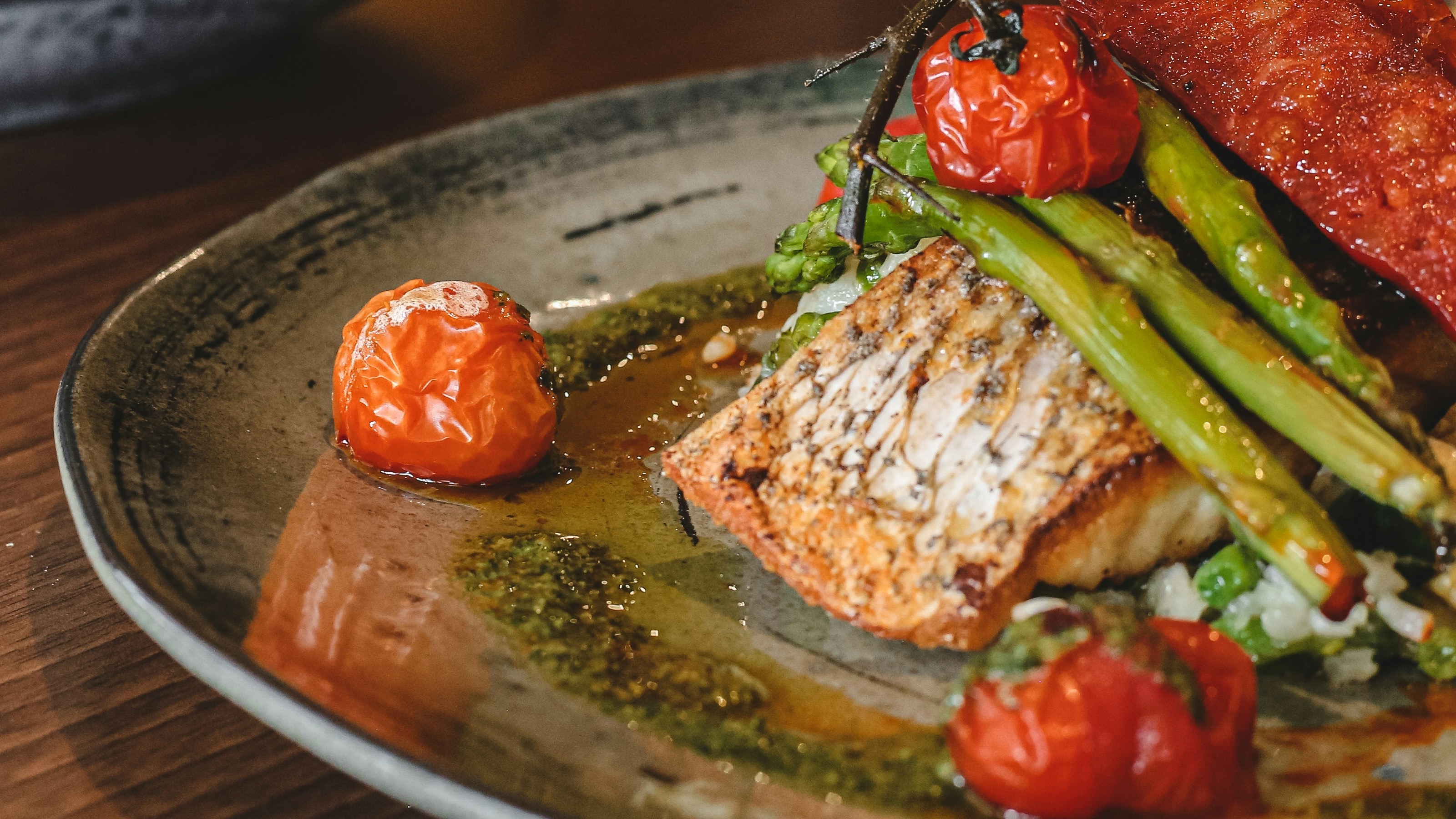
If you've spent any time looking up protein advice, you've probably seen wildly different numbers — anywhere from "0.8g per kilogram of bodyweight" to "1g per pound, minimum, or you're wasting your time." It's confusing, and most of it is written for competitive bodybuilders, not someone trying to get dinner on the table by 7pm.
Here's the practical version, without the spreadsheet.
The short answer: 25–40 grams per meal
For most adults eating three meals a day, aiming for roughly 25–40 grams of protein per meal — including dinner — comfortably covers daily protein needs without any tracking. That range holds whether your goal is general health, maintaining muscle as you age, or just feeling fuller for longer after you eat.
You don't need to hit the top of that range every single night. Think of it as a target you're generally circling, not a quota you fail if you miss.
Why dinner is the easiest meal to fix first
Breakfast and lunch are often rushed, grabbed, or eaten at a desk — hard to plan around. Dinner is different: it's usually the one meal where you're actually cooking, plating, and sitting down. That makes it the highest-leverage meal to get right, because a well-built dinner can single-handedly get you halfway to your day's protein total.
What 25–40 grams actually looks like on a plate
Numbers on a nutrition label don't mean much until you can picture them next to real food. Here's roughly what that range looks like from common proteins:
- 6 oz salmon fillet — about 36g protein
- 6 oz chicken breast or thigh — about 32–38g protein
- 6 oz lean beef sirloin — about 34g protein
- 7 oz shrimp — about 30g protein
- 3 large eggs + 1/2 cup cottage cheese — about 30g protein
- 1.5 cups chickpeas or lentils — about 24–26g protein (pair with a scoop of Greek yogurt to close the gap)
None of these require a food scale mid-meal — a palm-sized portion of meat or fish, or a generous cup of legumes plus a dairy side, gets you into range without measuring anything.
Do you need to hit an exact number every night?
No. Protein needs even out over a few days, not a single meal. If tonight's dinner is a lighter 20g, a bigger breakfast or a Greek yogurt snack later balances it out. The goal is a general pattern, not a nightly pass/fail test — which is exactly why we don't put macro breakdowns on every recipe here. Once you know roughly what 30g looks like on your plate, you stop needing the label at all.
The easiest way to hit your number without tracking anything
The simplest fix is cooking recipes that are already built around this range, so the protein math is handled before you even start chopping. That's the entire premise behind 30 High-Protein Dinners in 30 Minutes — every recipe lands between 24–38g of protein per serving, with nothing to calculate.
A couple of things people usually ask
Is 40g of protein too much for one meal?
No. The idea that your body can only "use" about 25–30g of protein per sitting has been largely walked back by more recent research — your body can absorb and use higher amounts just fine, especially if you're active. It simply won't go to waste.
What if I'm vegetarian — does 25–40g still apply?
Yes, though you may need slightly larger portions, since whole-food plant proteins are often (not always) a bit less concentrated per gram. A full block of tofu or 1.5 cups of lentils gets you into range just as reliably as a chicken breast does.
If you want to try this approach before committing to anything, grab the free starter pack below — five dinners, same idea, no card required.